





Quick Navigate
Understanding The Signs All Around You.

Sequoia Hill’s Signage by Newman
You probably think signage is just those letters on a storefront or the way a restaurant name lights up at night. But if you stop and stare for a while, then look around you, you’ll realize these three terms, signage, wayfinding, and placemaking are everywhere, working behind the scenes to shape how we move, feel, and interact with places and brands.
What most people don’t realize is that all of these fall under a larger discipline called Environmental Graphic Design (EGD), a field that blends architecture, graphic design, space planning, and human behavior to help people make sense of the built environment. In simpler words: it’s the invisible system that makes places feel intuitive, connected, and alive.
And no, you’re not alone if you have no idea what they are. Most people don’t. Yet every time you walk into a mall, wander through a shophouse complex, or navigate a new residential area in Jakarta, these elements are helping you understand where you are, where you’re going, and what that place is trying to say.
Let’s break them down one by one.
What is Signage?
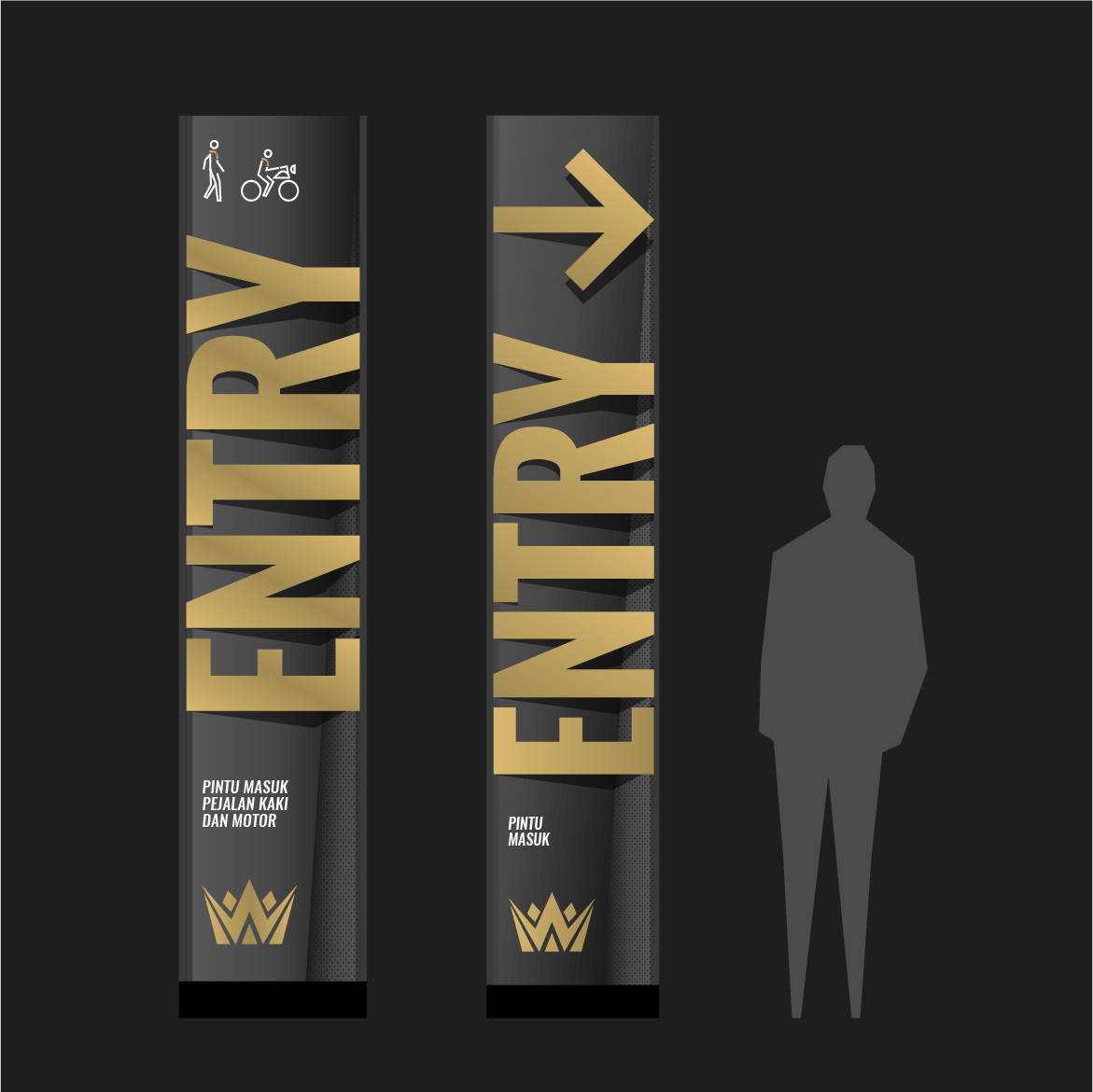
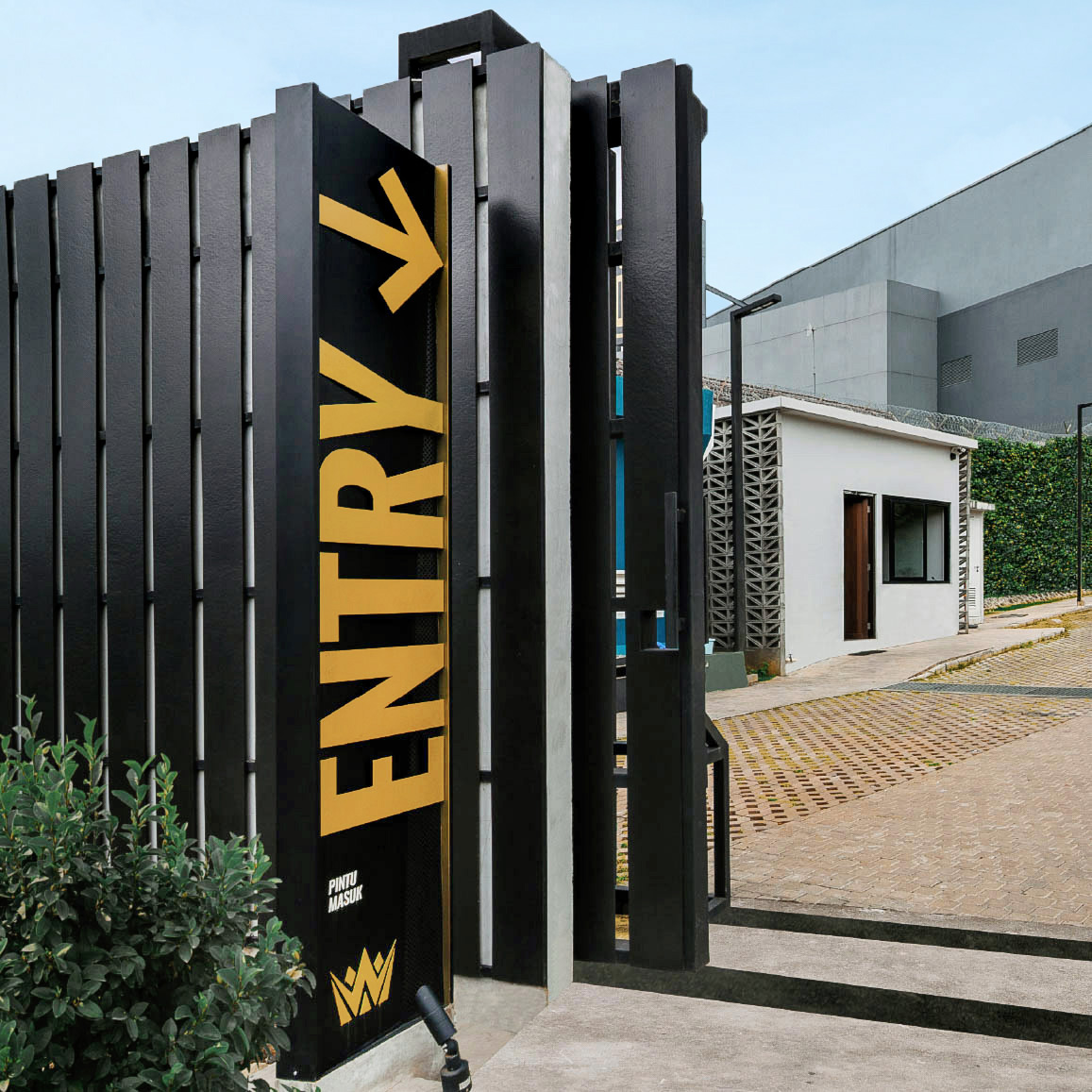
You might get the hint from the word ‘sign’ in it, and yes, signage is the physical visual markers that convey a message using visual elements. The message can be anything really, directions, names, or brand identity. Signage can also be placed as exterior building signs, interior direction, directional cues, store identity, and more.
In the real world – as in the identity that the public can see – signage is often the first physical expression of a brand. It tells you who is here and what kind of place you’re stepping into. That makes it a powerful tool not only for navigation but also for identification. A sign is often the first handshake between a space and its visitor.

Collins Boulevard signage as a defining identity for the whole area.
Source: Newman Documentation
What Is Wayfinding?
If signage is a tool, wayfinding is the journey. It’s the entire system that helps you navigate through space and reach your destination with ease. It includes orientation, maps, paths, arrows, landmarks, digital aids, and even how your brain interprets cues in an environment.
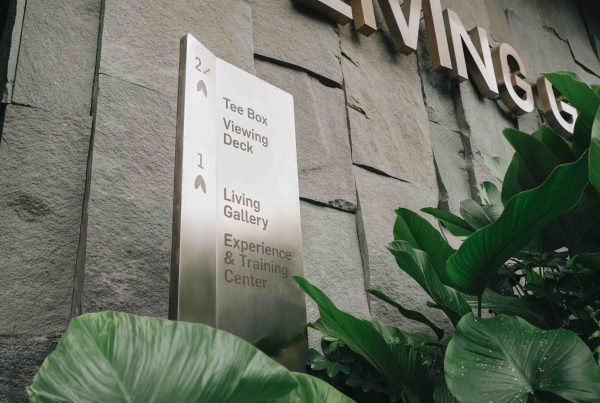
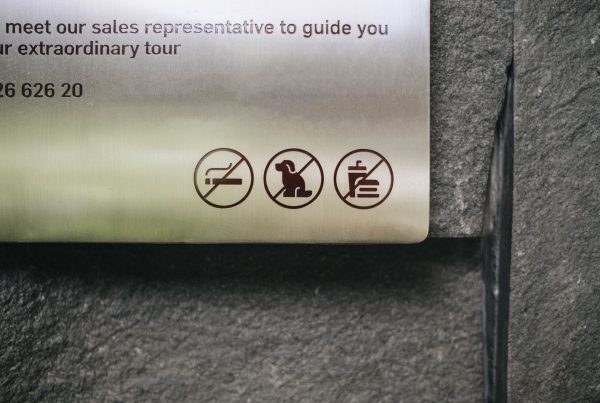
Imagine entering a massive shopping mall for the first time. A directory map welcomes you at the entrance. Arrows lead you to escalators and toilets. The pillars and walls in the parking area have distinct colors. The floors have distinct colors. Zones are labeled to help you understand where you are. That entire experience is wayfinding. It enables you to find your way without having to think too hard. It literally helps you find your way around.

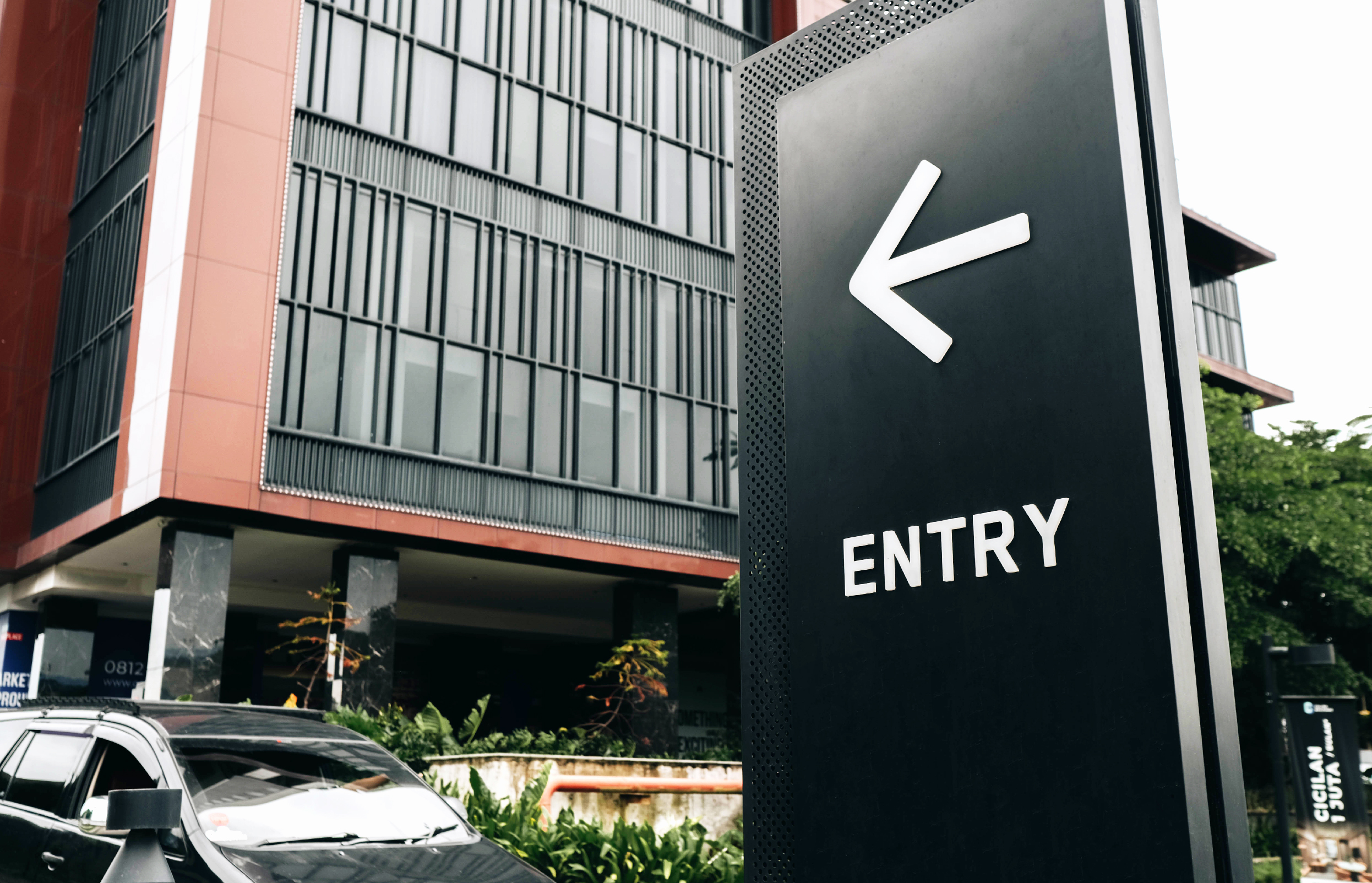
Wayfinding is important to help visitors find their way around an establishment.
Source: Newman Documentation.
So, What is Placemaking, then?
Now we go beyond navigation. Placemaking isn’t about directing people. It’s about creating places people want to be in. It considers how people interact with the environment, and it uses design, community input, identity, and culture to create spaces that feel meaningful, welcoming, and memorable
In short, placemaking is how a brand comes to life across an entire space, tying people, place, and identity together. It doesn’t depend solely on the architecture, but the built environment usually plays an important supporting role. And when branding and wayfinding work together, even different corners of a destination feel connected as one coherent place.
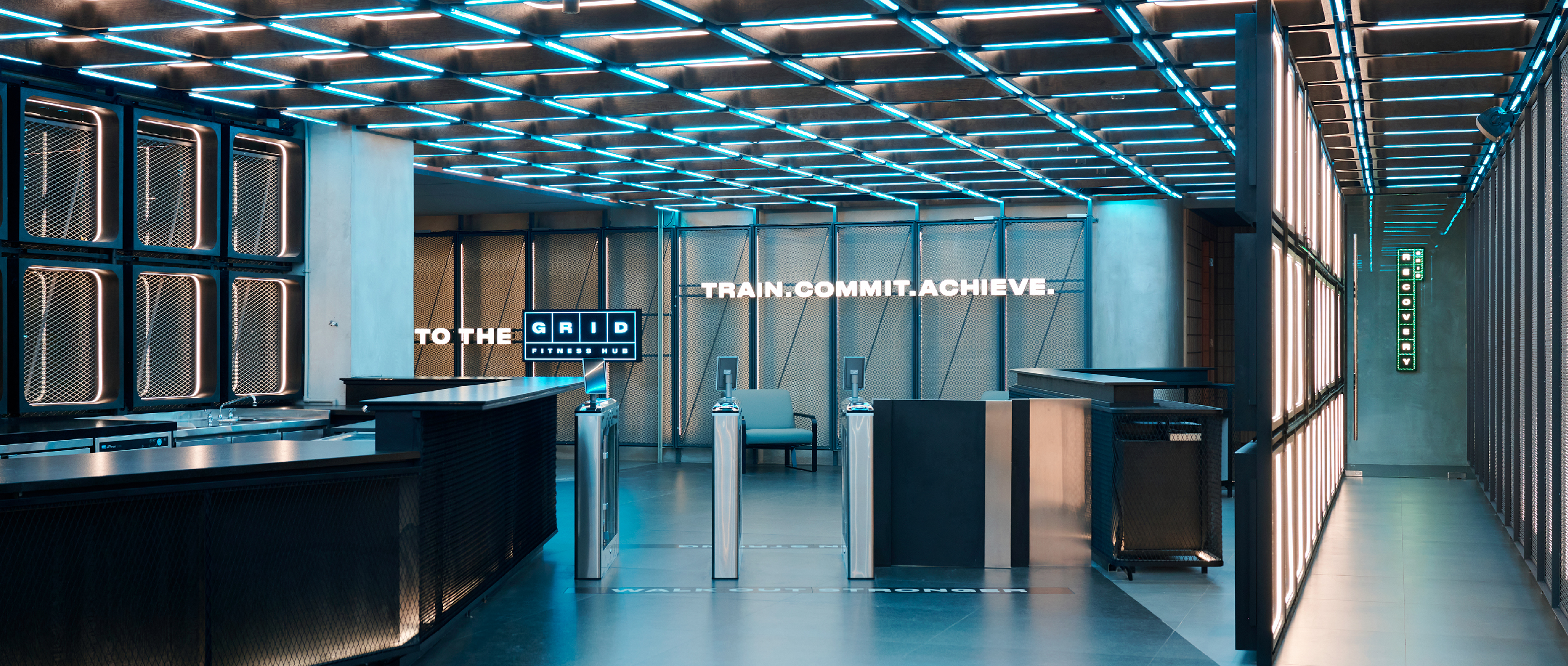
Cohesive placemaking enables a space to feel connected and unified.
Source: Newman Documentation
How These Three Work Together IRL
Here’s where the real design magic happens: signage, wayfinding, and placemaking synergize
– Signage communicates what is here, the brand identity, directions, and information.
– Wayfinding is a discipline and process that helps you easily navigate and find your way.
– Placemaking shapes the feeling of the environment and the reason you stay, explore, and engage.
When done right, you don’t notice these elements individually; you just feel confident, comfortable, and connected in the space.
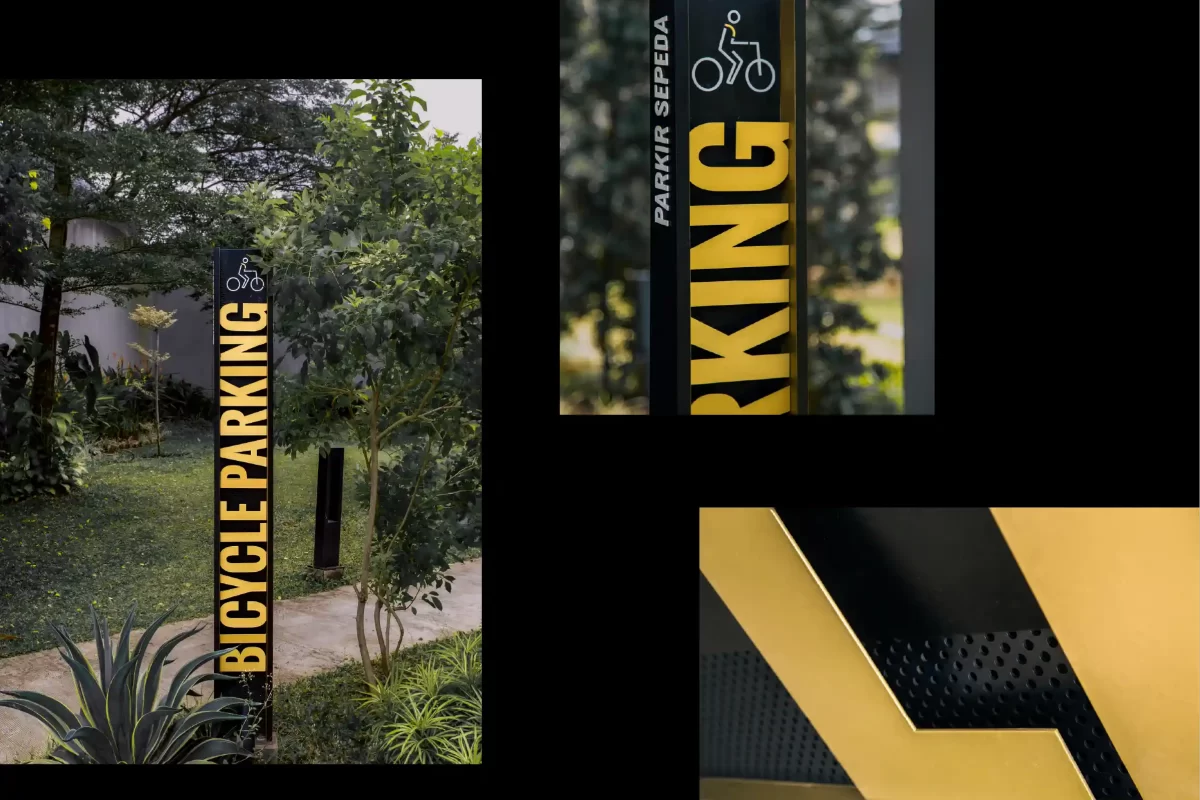
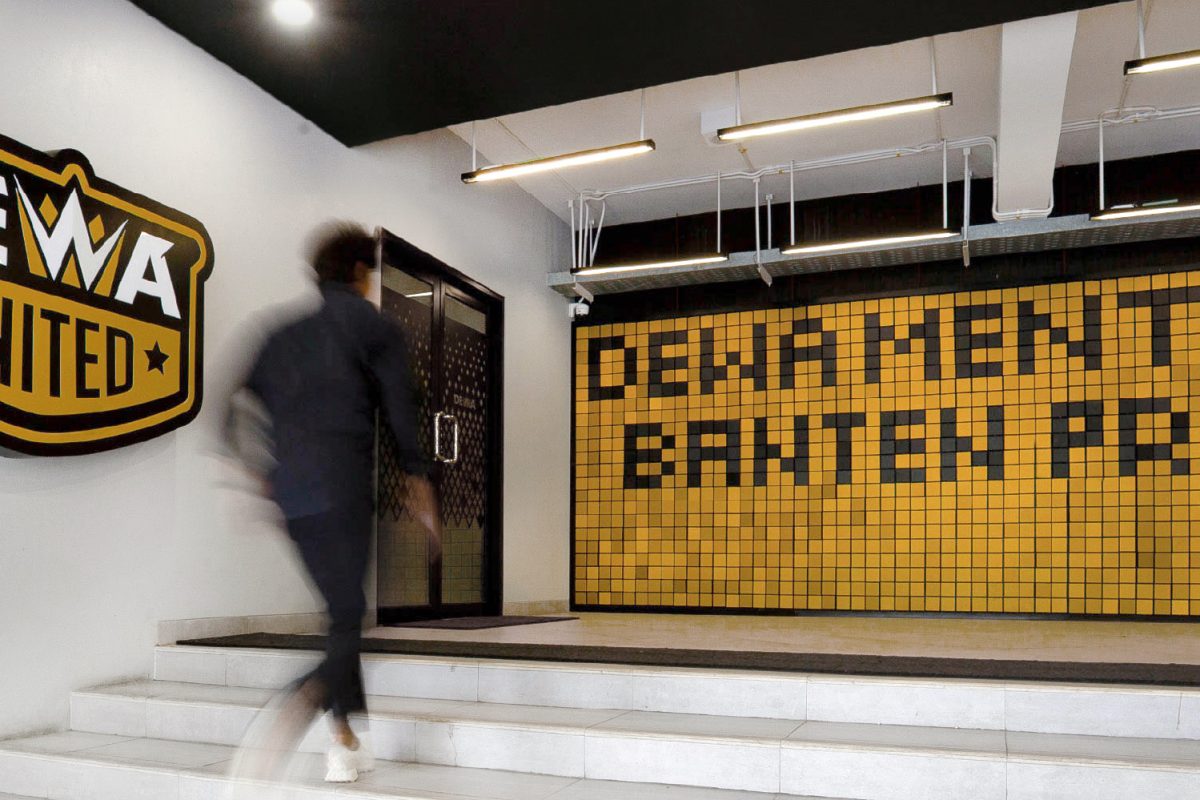
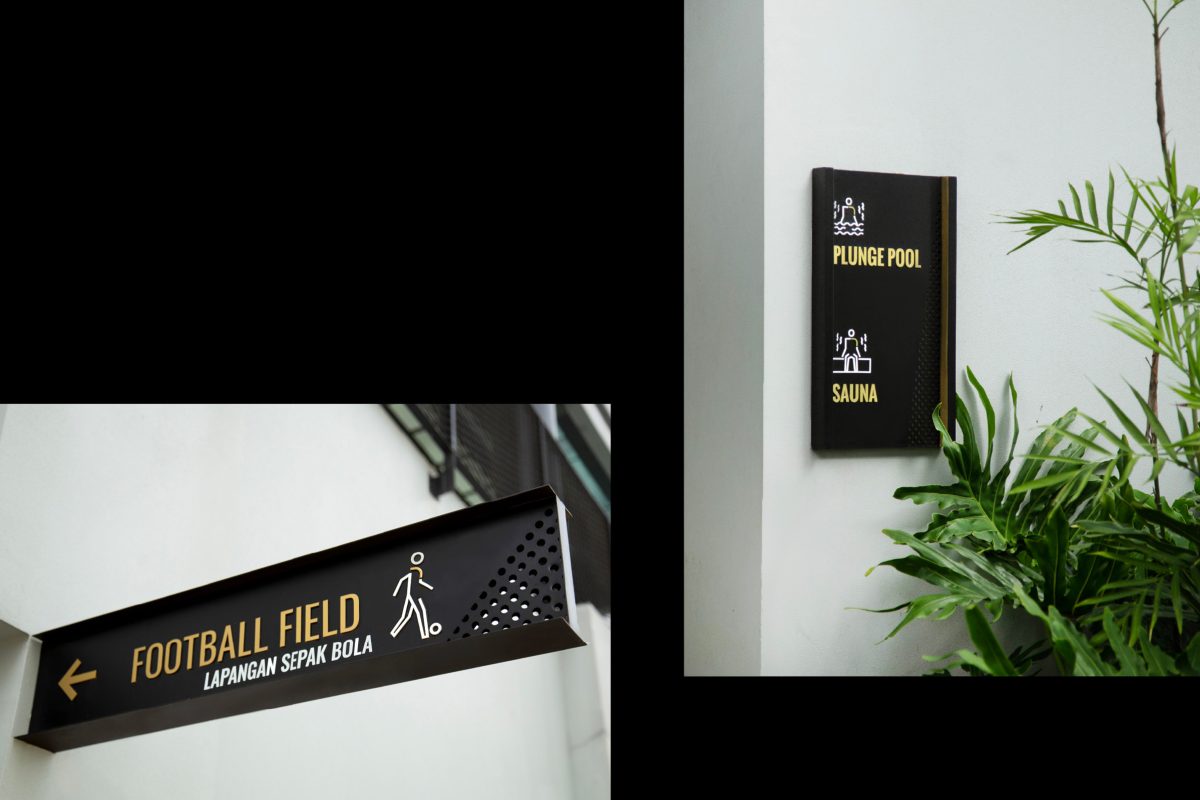
Collaboration of Signage, Wayfinding, and Placemaking in the real world.
Source: Newman Documentation
And Yes, We Do This Well
Most people probably never think about signage until something goes wrong, like getting lost, missing a turn, or feeling confused in a new environment. But signage and wayfinding have been around forever, quietly doing their job from main streets and malls to residential clusters and hospitality venues.
With Newman, your brand will get all that and more. We design signage systems and wayfinding journeys that reinforce brand identity, improve navigation, and enhance experience across various locations. As proven by our project with Altea Boulevard, a retail project with GAIA, and a sports compound project with Dewa United, each shows how thoughtful signage brings clarity and character to a space.
You can see that we approach signage strategically because good signage should be functional, memorable, and reflective of your brand’s soul. And since we do everything 360 degrees, we can help you from A to Z — from building the brand identity, planning the placemaking, all the way to installing the physical signage.
Take a look at some of our projects below, now imagine your brand being treated the same way: cleanly, clearly, and creatively.


Newman for Altea BLVD
Source: Newman Documentation

Newman for GAIA Shopping Mall
Source: Newman Documentation