





Quick Navigate


How These Visual Cues Have Quietly Guided Our Lives All Along
Have you ever noticed how you almost always know where to go, without consciously thinking about it? That’s signage at work.
We move through cities guided by quiet visual cues: signs that identify, direct, warn, and inform us. Often overlooked, these elements shape how spaces feel, function, and flow—only becoming visible when they’re missing.
Once you understand the types behind them, everything becomes clearer.
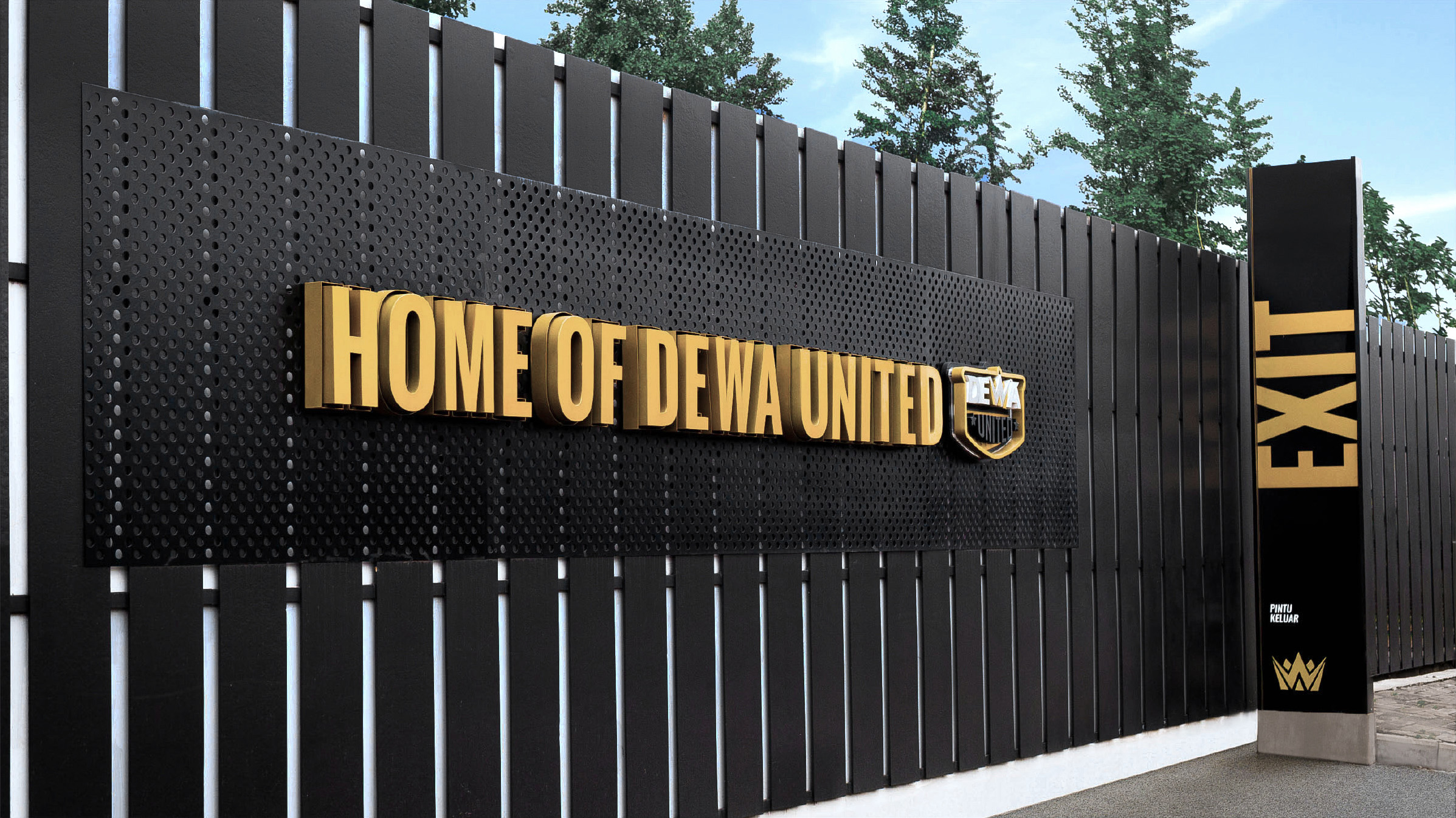
Signage for Dewa United, designed by Newman
Source: Newman Documentation
Pause for a moment, and you’ll start to see the few key types of signs that shape how we move through the world. Once you know them, everything feels clearer.
1. Landmark Identifiers
Identification Sign
Pylon signs are tall freestanding markers designed to be seen from a distance,
Placed along major roads or site entrances they answer the most fundamental question where am I
In large scale developments pylon signage becomes both an identity anchor and a navigational reference point establishing presence before visitors even arrive.
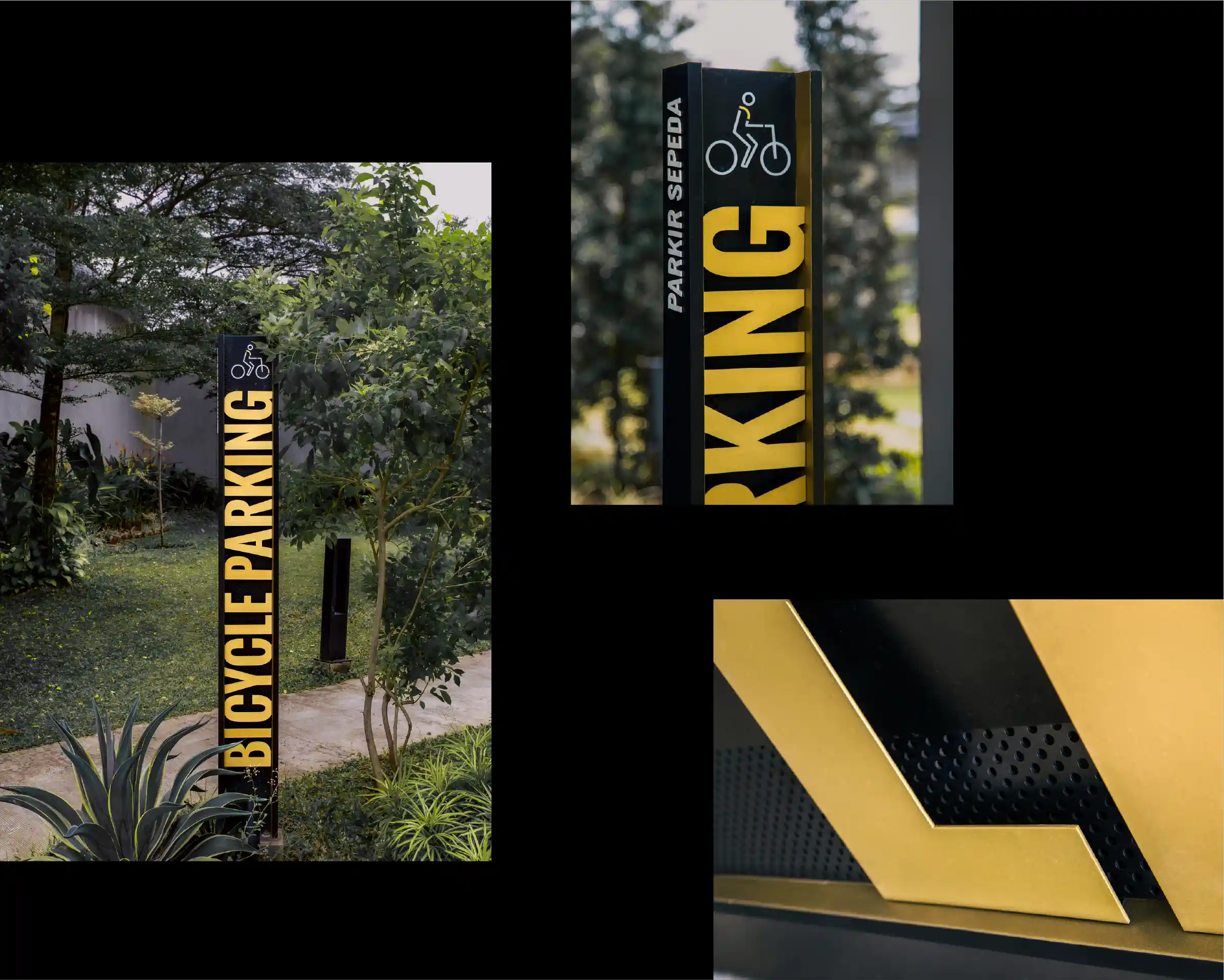
Pylon signage for Dewa United, designed by Newman
Source: Newman Documentation
In Newman’s work for Dewa United Basecamp bold proportions oversized typography and controlled material choices transform the sign into a landmark that is both functional and symbolic.
2. Storefront Identity
Wall and Facade Signs
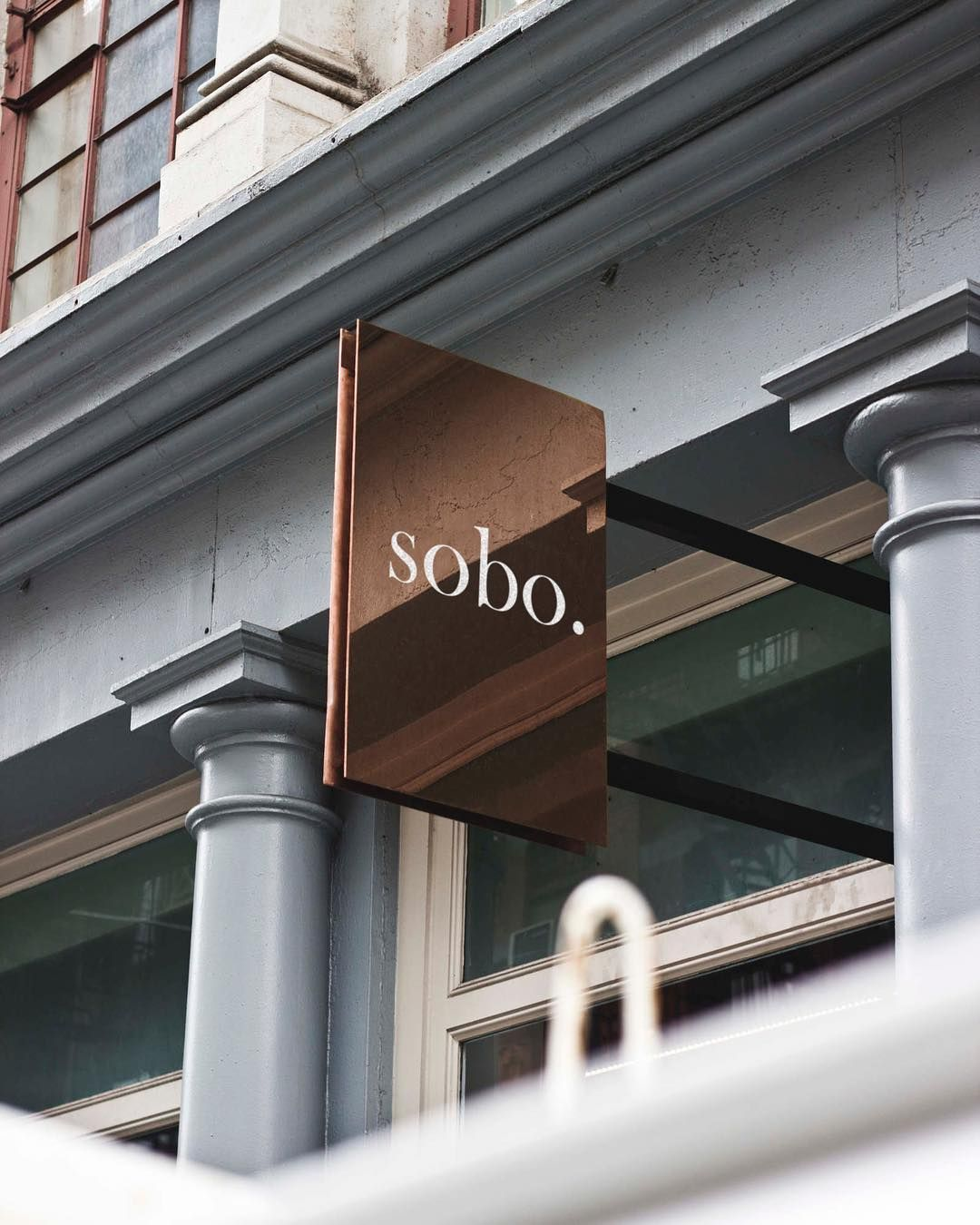
Source: Instagram: sobo.studio
This is the most common sign type, the nameplate of a business. Whether it’s an elegant gold-leaf inscription on a bank or bright, back-lit channel letters above your favorite restaurant, the facade sign defines the physical identity of a space. It’s how we instantly recognize where to go and who to trust when standing directly in front of a building.
3. The Glass Communicators:
Informational Sign

Window Graphics for Altea Blvd, designed by Newman
Source: Dinsor Documentation
Every piece of glass on a commercial building is a potential message board. Window graphics are decals, vinyl, or films that use the storefront glass to display everything from business hours and acceptance of credit cards to striking promotional photos. They maximize existing space to provide crucial information without the need for a separate physical structure.
4. The Dynamic Screen:
Digital Signage
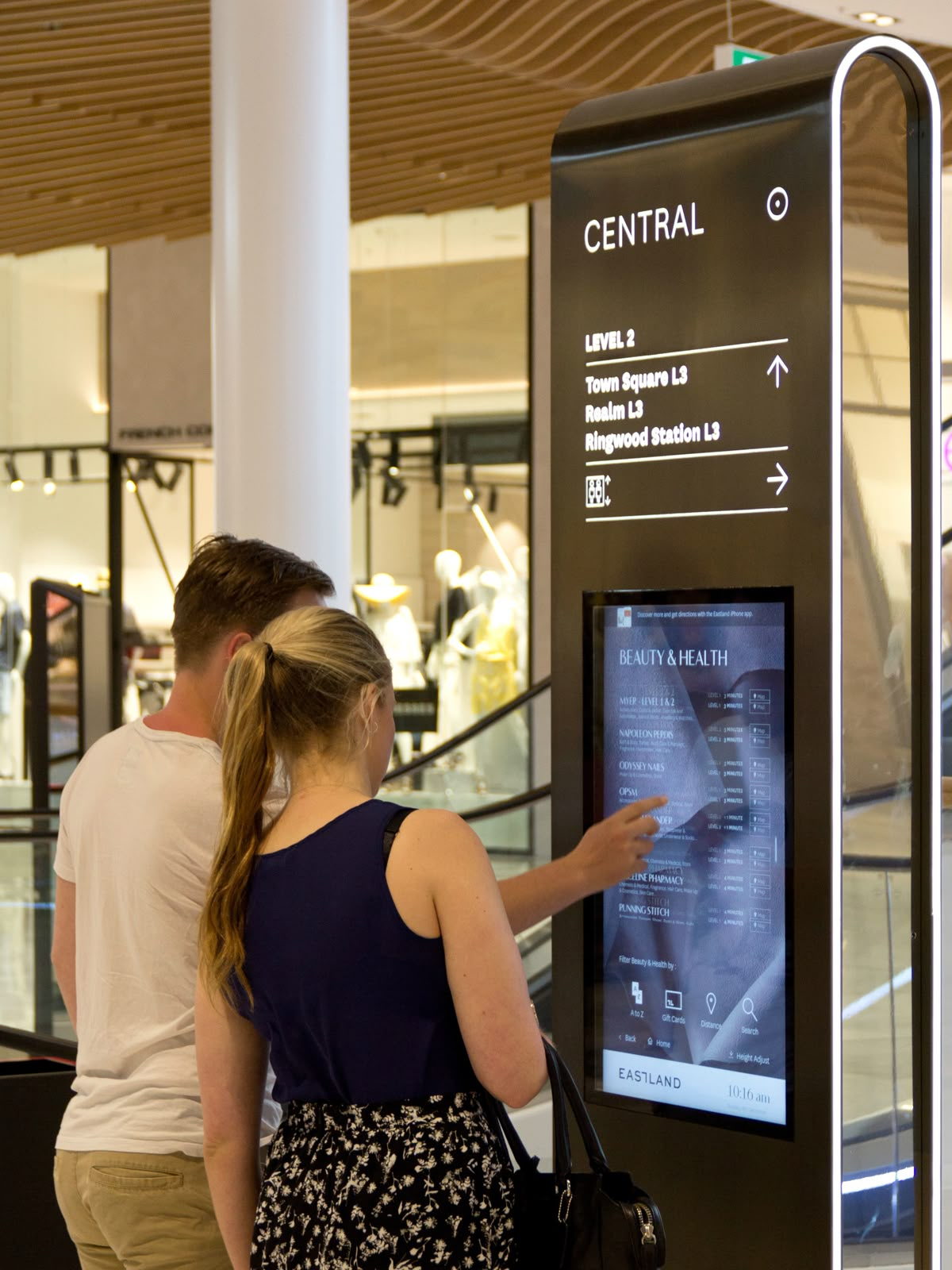
Digital Signage
Source: Behance
These are the constantly changing screens we see in transit hubs, retail chains, and restaurants. Digital signage—LED and LCD displays—represents the future of real-time communication. They can instantly update a menu board, show live train arrival times, stream emergency alerts, or feature rotating advertisements, keeping information fresh and impossible to ignore.
5. The Interior Navigator
Directional Sign

Wayfinding Signs for Gaia, designed by Newman
Source: Newman Documentation
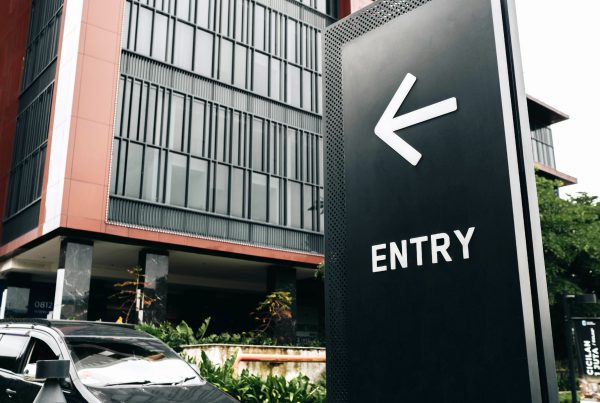
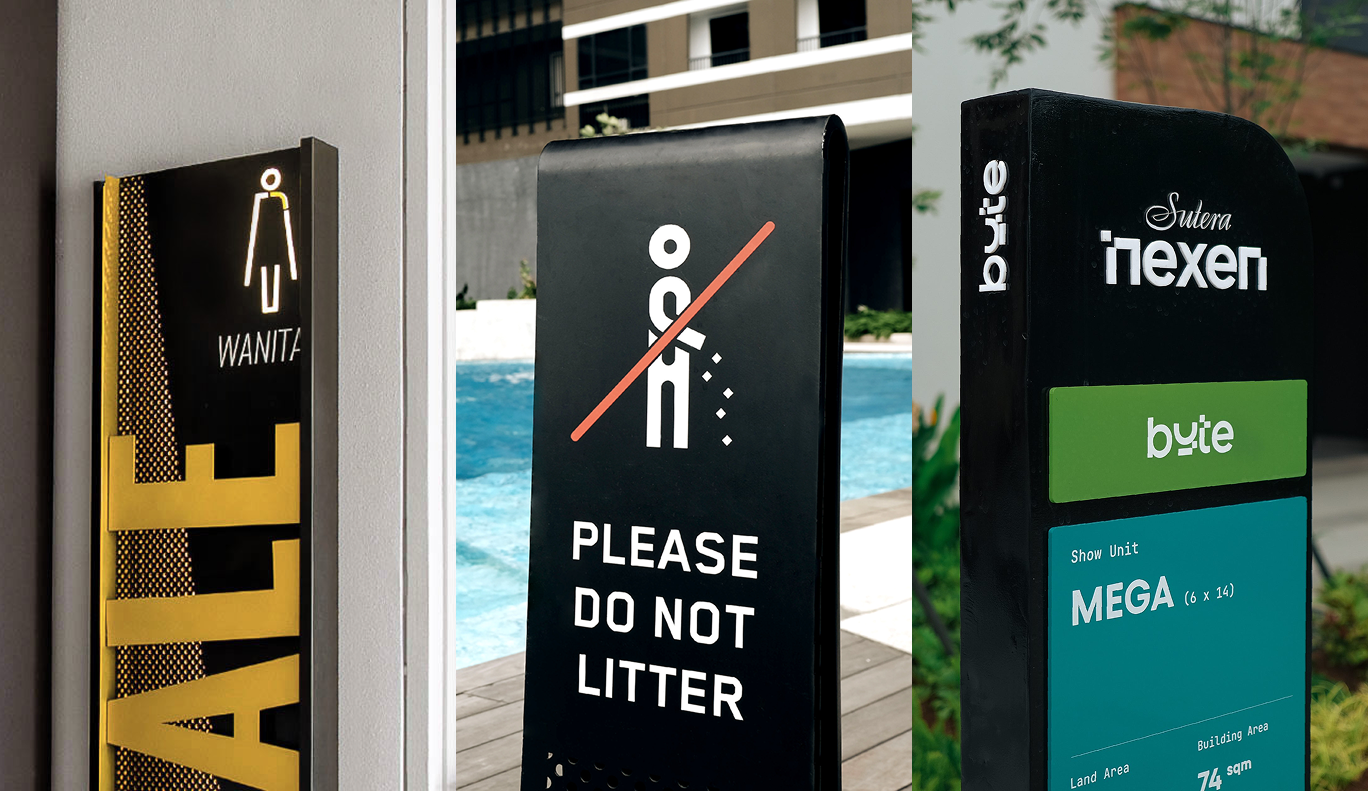
You’ve found the massive hospital, but now what? Wayfinding signs take over inside. These include directory maps, numbered room plates, directional arrows on the ceiling, and clear labels for restrooms and stairwells. They manage the flow of people and prevent congestion, ensuring that a visitor’s journey through a large, complicated building remains smooth and stress-free.
6. The Safety Sentinel
Warning / Safety Sign
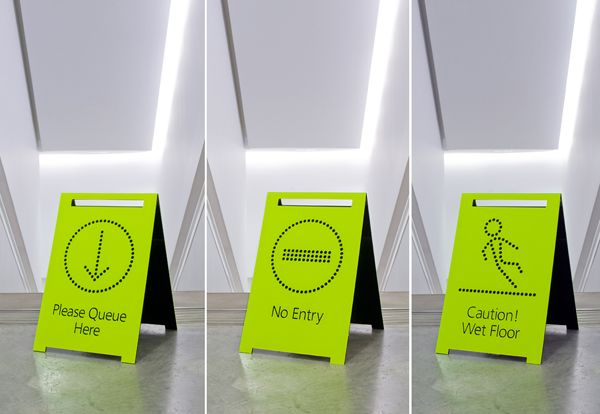
Regulatory and warning signs
Source: Pinterest
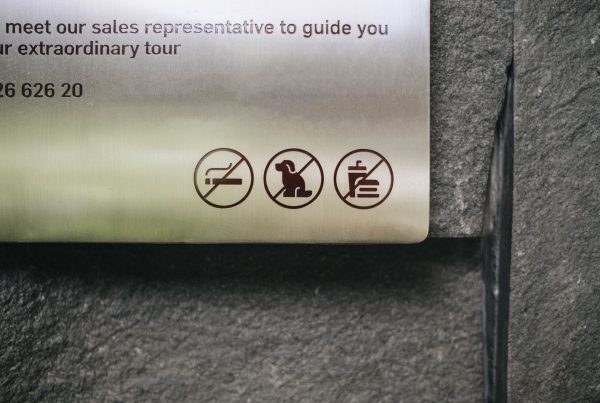
While the business-focused signs above draw us in, these silent guardians keep us safe and compliant. We find them everywhere, not just in business but on every street corner and in every public park. The bright yellow ‘Caution: Wet Floor’ sign, the universal symbols for ‘No Smoking’, or the regulatory sign dictating ‘Maximum Capacity’, are essential, non-negotiable alerts that define the safe boundaries of our shared spaces.